Full-Stack Product Engineering, Augmented End to End
Concept to production, with augmentation at every layer and an engineer owning each merge: schematic, PCB design, firmware, enclosure, release package, and ops. This is MCG Labs' third pillar, built on MCG LLC's hardware pedigree.
What Full-Stack Product Engineering Looks Like
A product is not one deliverable, it is a stack of them, each with its own way to get quietly wrong. Augmentation does the exhaustive checking at every layer; the engineer still decides what is correct and signs off before it moves.
Concept & architecture
Augmentation surveys the design space fast: candidate architectures, part families, power budgets, thermal envelopes. The engineer picks the architecture and owns the trade-offs that follow from it.
Schematic
Augmentation drafts and cross-checks against datasheets: pin assignments, decoupling, protection, power-tree math. The engineer verifies every net against the datasheet before it is trusted.
PCB design & layout
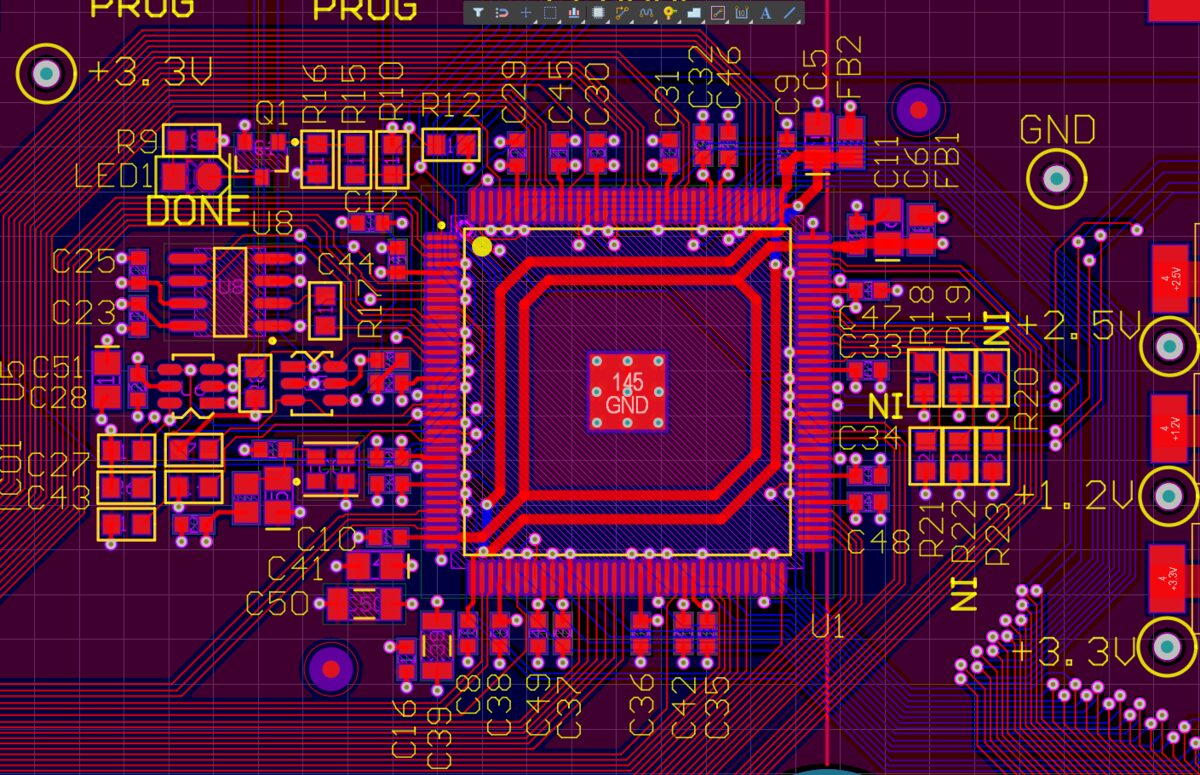
Augmentation checks footprints, clearances, and stack-up against the fab's real capabilities and the parts' real packages. The engineer places the board, routes the critical nets, and signs off on the layout.
Firmware & embedded
Augmentation writes boilerplate, drivers, and test harnesses, and reconciles register maps against the datasheet line by line. The engineer owns the state machine, the timing, and what actually ships.
Enclosure & engineering-grade 3D printing
Augmentation iterates mechanical fit, tolerance stacks, and print orientation. The engineer verifies the part fits the board, the connectors land, and the print holds up under the product's real use.
Verified, atomic release package
Augmentation reconciles BOM, schematic, layout, and centroid data line by line, the same correlation discipline behind our verified release package case study. The engineer treats the package as atomic: it ships only when every check passes.
Ops & private AI in the product
Where a product calls for it, augmentation extends into the shipped unit itself: private inference running on hardware the customer controls. The engineer defines what the product is allowed to do and verifies it stays inside that boundary.
PCB and Electronics Manufacturing
Getting a board built is its own discipline. We produce manufacturing data an assembler can actually use, and coordinate the release so the build goes right the first time.
Smart, readable, modifiable BOMs
Bills of materials a human and a machine can both read and revise, with live sourcing and second sources, not a frozen spreadsheet. Change a part and the BOM stays consistent with the schematic and layout.
Centroid & pick-and-place data
Placement and rotation data generated and checked against the real footprints, so every part is seated the way the designer intended on the assembly line.
Release coordination
The full package assembled, cross-checked, and coordinated with the assembler, the same atomic discipline behind our verified release package case study. Fewer round-trips, fewer surprises on the line.
Complete PCB specification
Fab drawings, stack-up, controlled impedance, and fabrication notes specified in full, so the board that comes back is the board that was designed.
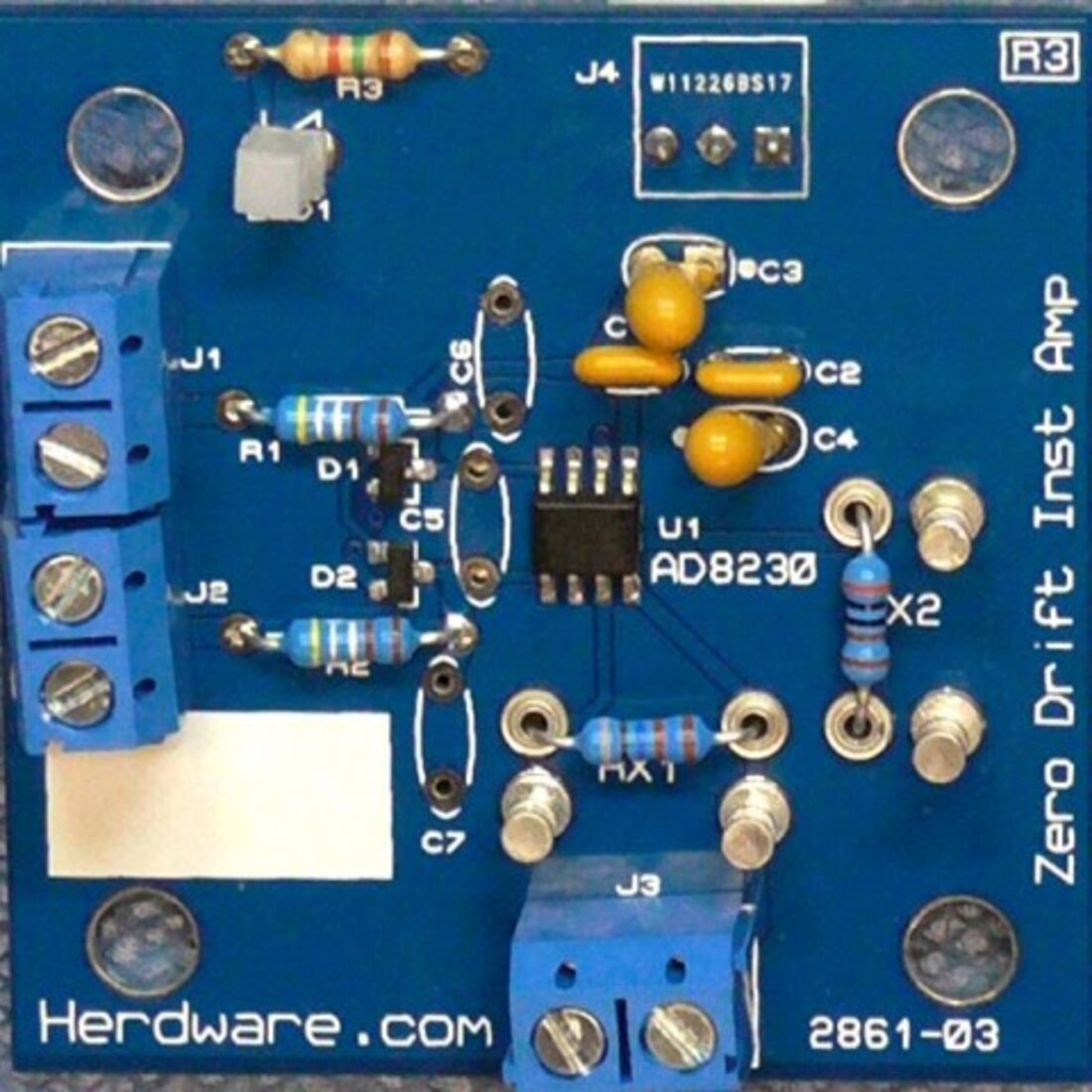
EDA and simulation experts: Altium, KiCad, and LTspice. We work natively in the tools your design already lives in, and we simulate before we commit.
From RTL to Silicon
Full-stack does not stop at the board. MCG recently completed a year-long project that took a design from RTL all the way through to working silicon: RTL synthesis, verification, physical implementation, and tape-out to a finished custom chip.
Augmentation did the exhaustive work at every stage, surveying the design space, reconciling constraints, and checking results against the specification. Engineers owned the architecture, the sign-off, and the decision to tape out. Taking a design the whole way to silicon is the clearest proof of what full-stack augmented engineering can carry.
Built on a Real Hardware Pedigree
MCG Labs is a subsidiary of MCG LLC (Mercury Consulting Group), a hardware engineering firm with decades of production hardware design, PCB layout, and engineering-grade 3D printing behind it. Full-stack product engineering here is not a slide in a pitch deck. It is the discipline MCG LLC has shipped boards and enclosures under for years, now run with AI-augmented product development layered into every stage of the build.
That lineage matters because augmentation only earns its keep when the engineer behind it already knows what correct looks like. See the hardware pedigree directly at MCG LLC.
The Rest of the Discipline Runs Through the Build
A delivered product is not isolated from the other two pillars. The same engineering discipline runs underneath it.
Private AI, shipped inside the product
Where a product needs on-device or on-premise inference, we build it in: your models, your data, running on hardware you control, with the same access control and audit trail we use for our own private AI hosting.
Explore private AI hosting → Pillar · Augmented EngineeringCorrelation and sorting rigor, built in
BOM lines reconciled against schematic and layout, parts ranked and sourced by weighted criteria, register maps checked against datasheets line by line. The same correlation discipline that defines augmented engineering runs through every layer of a full-stack build.
Explore augmented engineering →Full-Stack Product Engineering, Questions We Get
What is full-stack product engineering?
It is owning a hardware product end to end: concept and architecture, schematic, PCB design and layout, firmware, enclosure, a verified release package, and the ops that keep it running, with one team accountable from first sketch to shipped unit.
Is AI-augmented product development different from a typical EMS or design partner?
The deliverables are the same: schematics, PCBs, firmware, enclosures, release packages. The difference is how fast and how thoroughly each layer gets checked. Augmentation does the exhaustive cross-checking against datasheets and sources at every layer; an engineer still owns the architecture, the trade-offs, and the final sign-off.
Can private AI be built into the product itself?
Yes. Where a product calls for on-device or on-premise inference, we can ship private AI inside it, running on hardware the customer controls, with the same auditability and access control we use for our own private AI hosting.
Bring us a product, not just a board.
Tell us what you are building, from concept through the shipped unit. We will tell you where augmentation earns its keep and where the engineer has to stay in the loop.
Email info@mcgllc.com